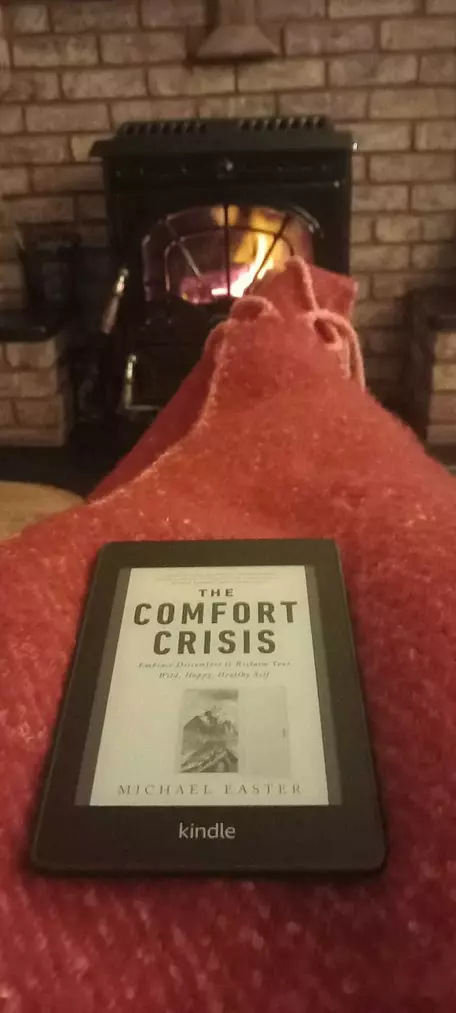

The Comfort Crisis by Michael Easter: An In-Depth Review
Summary
The Comfort Crisis by Michael Easter is a thought-provoking dive into the paradox of modern life: as we’ve become more comfortable, we’ve also become less happy, less healthy, and arguably, less human. Easter takes the reader on a month-long journey into the Arctic wilderness, using this extreme backdrop to explore key areas where modern life has made us too comfortable. These areas include physical exertion, hunger, silence, solitude, and even our sanitized approach to death. Through a blend of personal experience, scientific research, and expert interviews, Easter makes a compelling case for the benefits of reintroducing discomfort into our lives.
My key Takeaways
-
Reading The Comfort Crisis while undertaking the 75 Hard challenge added a new dimension to my physical and mental pursuits. The book’s exploration of how our bodies are evolutionary designed for physical exertion struck a chord with me. It delved into how our ancestors would not only run down prey until it was exhausted but also had the crucial task of carrying the animal back to their camp. This ancient form of ‘rucking’ resonated with me, especially considering that rucking is also a fundamental exercise in modern military training. The book validated my own experiences and provided a scientific grounding that enhanced my understanding of the benefits I’ve been gaining from rucking.
-
The book also made me rethink my relationship with hunger. I realised that I mostly eat because it’s “time to eat,” or because everyone else is eating, or because I’m bored, or because there’s an abundance of cheap, processed food that triggers a quick dopamine hit in my head. Rarely do I eat because I’m genuinely hungry. This newfound awareness has led me to be more mindful of my eating habits. I now find myself embracing hunger, building a relationship with it, and using it as a tool for discipline, which aligns well with the diet requirements of 75 Hard. This contributed massively to my 14kg weight lost so far during the challenge.
-
The idea of ‘good stress’ was perhaps my most significant takeaway from the book, and it’s a concept that’s central to my Coldtober challenge. In our modern, temperature-controlled environments, we’re rarely exposed to the extremes of heat or cold. Air conditioning in the summer and cosy indoor heating in the winter have essentially eliminated our need to experience these natural stressors. The immediate, visceral sensation of cold water hitting your skin serves as a mental reset button, compelling you to focus solely on the present moment. This experience cuts through the noise of daily stressors related to work, social pressures, and other complexities of life. It’s a potent reminder that sometimes the most effective way to navigate life’s challenges is to immerse yourself in something as basic and elemental as cold water. This simple act of embracing the cold has become a powerful tool for mental clarity, grounding me in the here and now.
-
The book also delves into our modern society’s sanitised approach to death, a topic that left me with mixed feelings. In the last century or so, we’ve outsourced the business of death to hospitals and funeral homes, distancing ourselves from the inevitable end we all face. This detachment from the reality of death is a stark contrast to practices in other cultures, like Bhutan, where death is a part of daily contemplation, and my all metrics, they are much happier for it. And this detachment has its drawbacks; it deprives us of a deeper understanding and acceptance of our mortality, which could, paradoxically, make our lives richer. While I’m still grappling with how I feel about this, the book suggests that confronting and accepting the reality of death can lead to a more profound appreciation of life and a clearer understanding of our place in the world. It’s an unsettling yet intriguing proposition that adds another layer to the book’s central theme: embracing discomfort in various forms can enrich our lives in unexpected ways.
Conclusion
The Comfort Crisis serves as a provocative wake-up call rather than a step-by-step guide. While not everyone can embark on a month-long Arctic expedition, the book’s core message is universally applicable: our comfort-centric lifestyles are depriving us of essential human experiences and emotions. It challenges us to find our own ways to reintroduce ‘good stress’ and discomfort into our lives. While the book may not provide a one-size-fits-all action plan, it does offer a compelling framework for self-examination and growth. It’s a must-read for anyone willing to step out of their comfort zones and rediscover a more primal, fulfilled version of themselves.z